
We think we know everything about Diana. We remember her legendary smile, her unforgettable fashion, her distinctive gaze, and the way she seemed to connect with people even when surrounded by cameras and ceremony.
But behind the public image was another Diana—quieter, warmer, and deeply human.
Photographs that have recently drawn attention offer a glimpse of the woman beyond the carefully observed royal life. They show moments of affection, motherhood, compassion, and ordinary happiness. Rather than focusing on formal appearances or glamorous events, these images capture Diana in situations where she appears relaxed and emotionally present.
Together, they tell a story of a woman who, despite living within one of the world's most closely watched institutions, often seemed determined to remain connected to ordinary human experiences.
The People’s Princess, More Real Than Ever
Diana Spencer was never simply a princess defined by protocol.
From an early stage of her public life, she became known for approaching people in a way that often felt unusually personal. She visited hospitals, spoke with patients, shook hands without hesitation, and spent time with people whom society could easily overlook.
Those gestures might appear simple today, but within the highly structured world of the British royal family, they represented a noticeable change in tone.
Diana had a natural ability to make people feel seen.
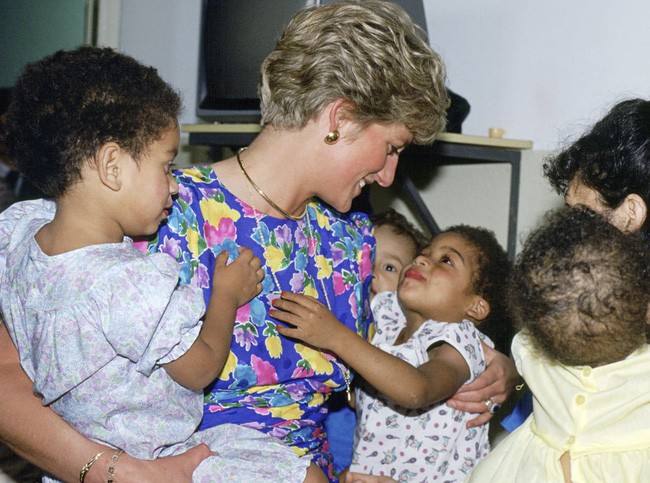
She did not always appear to approach humanitarian work as a distant royal duty. In many photographs, her expressions and body language suggest genuine attention toward the people around her. Whether she was speaking with patients, meeting children, or participating in charitable activities, she frequently appeared focused on the person in front of her rather than the cameras documenting the moment.
That quality became one of the most recognizable parts of her public image.
The photographs associated with her humanitarian work, including those showing her among children in Africa, offer another perspective on that side of her personality. Rather than presenting a perfectly controlled royal figure, they capture moments that feel spontaneous and emotionally direct.
Her influence was not simply connected to the title she carried. It was also connected to the way she interacted with people.
A Mother First and Foremost
Perhaps the most intimate side of Diana's life was her role as a mother.
Away from official ceremonies and state occasions, she wanted her sons, William and Harry, to experience as much normal childhood as possible. She wanted them to laugh, explore, play, and enjoy experiences that had little to do with royal protocol.
For a woman whose own life was surrounded by extraordinary public attention, creating ordinary moments for her children was especially meaningful.
Some of the photographs show Diana spending time with her sons in relaxed settings. There are scenes of amusement parks, meals, outdoor activities, and winter days filled with play. None of these moments necessarily appear extraordinary on their own.
That is precisely what makes them so touching.
They show a mother trying to give her children memories that felt normal.
There is something particularly powerful about seeing a famous family temporarily separated from the world of ceremonies and official duties. In these quieter moments, Diana appears less like an international celebrity and more like a mother enjoying time with her children.
She was also remembered for encouraging a close relationship between William and Harry. The idea that they should remain “best friends for life” has continued to resonate with people who look back on their childhood together.
Whatever complexities their lives would later bring, photographs from their younger years preserve a period when they were simply two brothers growing up under extraordinary circumstances.
The Woman Behind the Glamour
Diana's public image was often associated with elegance.
Her clothes were photographed around the world. Her hairstyles became widely recognized. Every public appearance could generate headlines, and her smallest gestures could attract enormous attention.
Yet glamour was only one part of her story.
Behind the carefully photographed dresses and formal appearances was a woman navigating an intensely complicated personal life.
Diana's marriage to Charles became increasingly difficult, eventually leading to separation and divorce. Those events marked painful turning points in her life and transformed the way the public understood her.
For someone constantly surrounded by cameras, finding genuine privacy was difficult.
There was a striking contrast between the public Diana and the private woman. In public, she could appear confident, graceful, and composed. Behind that image was someone trying to understand her place within a demanding institution and within a life that rarely allowed her to disappear from public view.
The newly highlighted photographs are meaningful partly because they provide glimpses of that less formal side.
They remind viewers that Diana's life cannot be reduced to royal ceremonies, fashion photographs, or newspaper headlines.
She was also a daughter, a sister, a friend, and most importantly, a mother.
Turning Personal Experience Into Compassion
One of the defining aspects of Diana's later public life was her involvement in humanitarian causes.
She became associated with efforts to raise awareness about HIV and AIDS at a time when misinformation and fear surrounding the disease were widespread. Her public interactions with people affected by HIV helped challenge some of the stigma surrounding them.
She also became involved in campaigns concerning landmines and supported causes involving vulnerable people around the world.
These efforts were significant because Diana often used her visibility to draw attention to people who otherwise received little public attention.
Her approach was frequently personal rather than purely ceremonial.A photograph of Diana sitting beside someone, holding a hand, speaking to a patient, or interacting with a child could communicate something that a formal speech could not.
It showed that compassion did not always require complicated words.
Sometimes, simply being present mattered.
Her humanitarian work also contributed to a broader transformation in how members of the royal family could interact with the public. The emotional openness associated with Diana became an important part of her legacy.
Strength Behind the Smile
It can be tempting, when looking at photographs of Diana smiling, to imagine that her life was always filled with happiness.
But photographs capture only moments.
Behind the smiles were personal struggles, intense media attention, difficult relationships, and the enormous pressure of being one of the world's most recognizable women.
That contrast makes many of the quieter photographs even more poignant.
A smile does not necessarily mean a person has no difficulties. Sometimes, it simply represents a moment of happiness in the middle of a complicated life.
Diana seemed capable of finding those moments.
She could laugh with her children, interact warmly with strangers, participate in humanitarian work, and allow herself to enjoy ordinary experiences despite the extraordinary circumstances surrounding her.
That humanity was perhaps one of the reasons so many people felt connected to her.
A Legacy That Continues
Diana's legacy has survived far beyond the years of her public life.
Her sons, William and Harry, have each carried aspects of the values associated with their childhood and upbringing into their own lives. Generosity, empathy, public service, and attention to vulnerable communities remain themes frequently connected with Diana's memory.
The photographs also preserve something that words sometimes struggle to express.
They show moments.
A mother laughing with her children.
A woman listening to someone who needed attention.
A princess stepping outside the boundaries of ceremony.
A person choosing warmth in situations where formality might have been easier.
That is why previously overlooked or newly circulated photographs can feel so powerful. They do not necessarily reveal an entirely different Diana. Instead, they add another layer to the woman the public thought it already knew.
The Diana captured in these moments is not simply the fashion icon, the princess, or the international celebrity.
She is a human being.
More Than a Princess
Diana's story continues to attract attention because it contains a tension that many people can understand: the difference between the person the world sees and the person who exists behind the public image.
She lived a life of extraordinary privilege, but she also experienced pressures that came with extraordinary visibility.
She was constantly watched, photographed, discussed, and interpreted.
And yet, some of the photographs that remain most memorable are not necessarily the grandest ones.
They are the ordinary moments.
Diana with her children.
Diana laughing.
Diana listening.
Diana reaching out to people who needed compassion.
Those images offer a reminder that historical figures are not made memorable only by official titles or major events. Sometimes, their lasting impact comes from the small gestures that reveal character.
Diana became known as the People's Princess, but perhaps the enduring appeal of that description comes from how approachable she often appeared.
She could stand among crowds and still make people feel as though she was speaking directly to them.
She could enter a hospital room and make a patient feel noticed.
She could step away from the formal expectations of royal life and simply enjoy a day with her children.
And decades later, those moments still have the power to move people.
The photographs may be old, but the emotions they capture remain remarkably familiar: a mother's love, a desire for normality, compassion for others, and the simple human need to be understood.
Diana's life was far more complicated than any collection of photographs can fully explain. But these quieter images provide another way of remembering her—not only as a princess watched by millions, but as a woman who tried to find kindness, family, and humanity within an extraordinarily public life.
More than a princess, Diana remains a symbol of warmth and compassion for millions of people around the world. And perhaps that is why, even after all these years, photographs of her can still make us pause, remember, and feel.
The Quiet Moments That Told the Bigger Story
Perhaps that is the most enduring quality of the photographs associated with Diana: they often seem to say more when she is doing less.
There is no grand stage.
No ceremonial balcony.
No carefully choreographed procession.
No elaborate speech.
Instead, there is a woman sitting beside her children, laughing with a friend, speaking to someone in a hospital corridor, walking through a garden, or simply looking away from the camera.
These moments may appear insignificant compared with the major events of her life, but they help explain why Diana became such a powerful figure in popular memory.
People did not connect with her only because she was a princess.
They connected with the emotions they recognized in her.
The tenderness of a mother.
The uncertainty of someone trying to find her place.
The vulnerability of a person who could not escape public attention.
The instinct to comfort someone who was hurting.
And the desire to experience something ordinary in a life that was anything but ordinary.
That combination made Diana difficult to reduce to a single image.
She could be glamorous and vulnerable.
Confident and uncertain.
Playful and serious. A princess and, at the same time, simply a mother trying to make her children laugh.
A Childhood Far Removed From Ordinary
To understand why Diana seemed so determined to create ordinary experiences for William and Harry, it helps to remember that her own childhood was complicated.
Diana Frances Spencer was born into an aristocratic family in 1961.
Her upbringing was privileged in many ways, but privilege did not mean that childhood was without emotional difficulties.
Her parents' marriage ended when she was young, and the separation had an impact on the family.
Diana grew up surrounded by a world of wealth, tradition, expectations, and social connections, but she also experienced the emotional complexity that can come with a fractured family.
That history may help explain why family became such an important theme in her adult life.
When Diana became a mother herself, she appeared particularly conscious of the importance of giving her children affection and reassurance.
She wanted them to experience laughter.
She wanted them to have adventures.
She wanted them to know that the world outside palace walls existed.
And perhaps most importantly, she wanted them to understand that they were loved not because of their titles, but because they were her sons.
William and Harry Saw a Different Side of Diana
To the public, Diana was constantly surrounded by photographers.
To William and Harry, she was simply Mum.
That difference is important.
A photograph showing Diana laughing with her sons may seem like a small family moment, but it also captures a side of her that millions of people could never see directly.
The woman who appeared on television was a global figure.
The woman who sat beside her children at home was something entirely different.
She could be playful.
She could be affectionate.
She could be teasing.
She could be protective.
She could also be imperfect, like any parent.
Her sons would later speak about the experiences of growing up with a mother whose life was watched so closely.
Their childhood was unusual from the beginning.
They could not simply walk through a public place without being recognized.
Their family holidays could become newspaper stories.
Their school years attracted attention.
Even ordinary childhood experiences could become photographs distributed around the world.
Diana understood the pressure.
And she sometimes tried to create a protective space around her children.
Trying to Give Her Sons a Normal Childhood
Some of the most memorable images of Diana with William and Harry show them participating in ordinary activities.
They went to amusement parks.
They visited restaurants.
They spent time outdoors.
They took holidays.
They attended school.
They laughed together.
These moments mattered because Diana understood that childhood cannot be built entirely around ceremony.
A child does not necessarily remember the grandeur of a formal event.
A child remembers being laughed with.
A child remembers a day at the beach.
A child remembers an amusement park ride.
A child remembers a joke.
A child remembers the feeling of being safe.
Diana seemed to understand that.
She could take her sons into environments where they were simply children rather than future members of the royal family.
That did not erase the unusual circumstances surrounding their lives.
But it gave them moments that felt ordinary.
And perhaps that was one of the greatest gifts she could give them.
The Camera That Could Never Quite Go Away
There was an unavoidable irony in Diana's life.
The cameras helped create her public image, but they also invaded the private spaces she tried to protect.
Photographers followed her everywhere.
Her clothes were analyzed.
Her relationships were discussed.
Her facial expressions became headlines.
A photograph could be taken in a fraction of a second and then interpreted by millions of people.
A smile could become evidence of happiness.
A serious expression could become evidence of sadness.
A glance could become the basis for an entire story.
This is one reason candid photographs of Diana remain so fascinating.
They remind us that a photograph never tells the entire story.
A person can smile while carrying private worries.
A person can look serious while feeling perfectly content.
A person can appear confident while being uncertain inside.
Diana's life was repeatedly interpreted through images.
Yet the woman in the images was always more complicated than the image itself.
The Pressure of Becoming Famous
Diana's transformation from a relatively private young woman into one of the most photographed people on Earth happened with extraordinary speed.
Her engagement to Charles attracted enormous international attention.
The wedding became a global spectacle.
Millions watched.
Her dress became iconic.
Her appearance was discussed in newspapers and magazines around the world.
Suddenly, Diana's identity was no longer simply her own.
She had become an international symbol.
Every public appearance contributed to a growing mythology around her.
People wanted to know what she wore.
What she said.
Where she went.
How she looked.
How she behaved.
And eventually, they wanted to know about her private life.
That level of attention would have been difficult for almost anyone.
For Diana, it became part of everyday existence.
The Difference Between Being Seen and Being Known
One of the deepest contradictions in Diana's story is that she was seen by millions but truly known by very few.
People saw photographs of her constantly.
They watched interviews.
They read stories.
They followed her public activities.
Yet seeing someone is not the same as knowing them.A photograph can reveal a facial expression but not the thoughts behind it.
A television interview can reveal someone's words but not everything they feel.
A public appearance can show kindness but cannot explain every private struggle.
Diana became one of the most recognizable women in modern history, but her inner world remained partly private.
That's why people remain fascinated by quieter photographs.
They appear to offer a glimpse beyond the official image.
Not necessarily the complete truth.
Not a secret version of Diana.
But another fragment.
Another moment.
Another piece of the person.
A Princess Who Changed the Meaning of Distance
Royal life has traditionally involved a certain amount of distance.
Ceremony creates boundaries.
Titles create hierarchy.
Protocol determines how people behave.
Diana did not completely abandon those traditions, but she often seemed more comfortable crossing emotional boundaries than many people expected.
She could sit beside patients.
She could touch people.
She could hug children.
She could listen closely.
She could make physical contact feel natural.
These gestures were powerful because human beings communicate through more than words.
A handshake can say, "I see you."
A hug can say, "You are not alone."
Sitting beside someone can say, "I am willing to stay."
Diana seemed to understand the emotional power of presence.
The HIV/AIDS Moment That Changed Public Perceptions
One of the clearest examples of Diana's influence involved HIV and AIDS.
During the 1980s, misinformation surrounding HIV was widespread.
Fear was common.
Many people incorrectly believed that the virus could be transmitted through ordinary casual contact.
That misunderstanding contributed to stigma against people living with HIV and AIDS.
Diana's public interactions with patients became significant partly because she was willing to be physically present.
Photographs of her shaking hands with people affected by HIV attracted attention.
The gesture itself was simple.
But the message was powerful.
She was demonstrating that compassion did not require fear.
Her actions helped draw public attention to the humanity of people who were often treated with suspicion or isolation.
It was a moment when a photograph could communicate something more effectively than a long explanation.
A princess reaching out to another human being.
No distance.
No visible fear.
Just contact.
The Power of a Single Photograph
This is perhaps why Diana's photographs continue to circulate decades later.
Some images become historical documents because they represent something larger than the moment itself.
A photograph of Diana with a patient can represent compassion.
A photograph of Diana with her sons can represent motherhood.
A photograph of Diana laughing can represent normality.
A photograph of Diana walking through a crowd can represent her unusual relationship with the public.
The image becomes more than a picture.
It becomes a symbol.
But symbols can also simplify people.
That's why it is important to remember that Diana was not one thing.
She was not simply the "People's Princess."
She was not simply a fashion icon.
She was not simply a humanitarian.
She was not simply a mother.
She was a complex person whose life contained many different roles.
Diana and the World of Fashion
Fashion became another major part of Diana's public identity.
Her clothing choices were followed closely by the international press.
She wore formal gowns at major events, elegant daywear during public engagements, and increasingly confident styles as she grew older.
Her fashion evolution became part of her personal story.
Early in her public life, her style was often described as youthful and romantic.
Over time, it became more sophisticated.
Her clothing sometimes seemed to communicate confidence at moments when her private life was undergoing enormous change.
This is another reason photographs matter.
Clothing is visual language.
A person can communicate confidence without saying a word.
Diana became extremely skilled at navigating that visual language.
But even here, it would be a mistake to reduce her to fashion.
The clothes were memorable.
The person wearing them was more important.
The Famous "Revenge Dress" and Public Perception
One of the most discussed examples of Diana's relationship with fashion came after the breakdown of her marriage.
A black dress she wore to a public event became widely associated with the moment.
The media gave it a dramatic nickname, and the image became part of popular culture.
But the fascination with that photograph also demonstrates how quickly Diana's appearance could be turned into a narrative.
The public saw a woman dressed confidently.
The media interpreted it.
People assigned meaning to it.
The image became symbolic.
Yet only Diana could fully know what she felt that evening.
This is a recurring lesson in her story.
Photographs can be powerful.
But they are not mind readers.
The End of the Marriage Changed Everything
Diana's marriage to Charles became increasingly difficult and eventually ended in divorce.
The breakdown of the relationship was intensely covered by the media.
Private pain became public discussion.
Personal events became newspaper headlines.
The pressure was enormous.
For Diana, the period also represented a transformation.
She was no longer simply a young princess learning how to perform royal duties.
She was becoming a woman increasingly determined to define her own identity.
Her public work continued.
Her humanitarian interests expanded.
Her fashion became more confident.
Her public voice became more independent.
She appeared increasingly willing to speak about difficult subjects.
That evolution became an important part of the second half of her life.
Finding a Purpose Beyond Royal Protocol
After her divorce, Diana continued humanitarian work.Without the same formal role she had held as a senior member of the royal family, she became increasingly selective about the causes she supported.
That gave her public life a different character.
She could focus more directly on issues that mattered to her.
She remained involved with organizations supporting vulnerable people.
She continued raising awareness around HIV/AIDS.
She supported efforts related to homelessness.
She became associated with campaigns against landmines.
And she continued to visit hospitals, children, and communities in difficult circumstances.
Her influence came partly from her ability to attract attention.
When Diana visited a cause, journalists followed.
That meant an issue that might otherwise receive limited coverage could suddenly become a global story.
Her celebrity became a tool.
The Landmine Campaign
Diana's involvement in the campaign against landmines remains one of the most recognized chapters of her humanitarian work.
She visited Angola in 1997 and walked through an area that had been affected by landmines.
The images were striking.
A woman who had spent much of her life surrounded by formal royal ceremony was suddenly walking through a landscape marked by the danger of hidden explosives.
The photographs traveled around the world.
They brought attention to the issue.
Her visit also became controversial in some political circles, but the humanitarian significance of the campaign continued to attract international attention.
Once again, Diana's ability to generate media attention became part of the story.
She did not need to be an expert in every technical aspect of a complex issue to draw attention to the people affected by it.
Her role was often to make the issue visible.
Why Visibility Mattered
Diana understood something about modern media that many public figures struggled to use effectively.
People pay attention to people.
Statistics can be forgotten.
A face is harder to ignore.
A photograph of someone affected by a humanitarian crisis can make an abstract problem emotionally understandable.
Diana's presence could transform a distant issue into something personal.
That was one of her greatest strengths as a public figure.
She could take a subject that seemed remote and make it feel immediate.
And because millions of people were already interested in her, her presence created an enormous platform.
Compassion Was Not Always Comfortable
Diana's humanitarian work did not mean every situation was simple.
Many of the issues she became involved with were emotionally difficult.
HIV/AIDS involved fear and stigma.
Landmines involved war and long-term civilian suffering.
Homelessness involved poverty and social exclusion.
Hospitals involved illness and death.
Children in difficult circumstances often carried burdens that no child should have to carry.
Diana's willingness to enter these environments made her public image different from the traditional image of royalty.
She was not always standing behind a podium.
Sometimes she was sitting on a hospital bed.
Sometimes she was kneeling beside a child.
Sometimes she was holding someone's hand.
Those photographs created a different kind of royal image.
The Importance of Listening
One of Diana's most frequently remembered qualities was her ability to listen.
Listening is easy to underestimate.
Public figures often speak.
They give speeches.
They make statements.
They answer questions.
But listening requires something else.
It requires attention.
It requires patience.
It requires allowing another person to occupy the center of the conversation.
Many photographs of Diana capture precisely that.
She appears to be looking at someone.
Not at the camera.
Not at the crowd.
At the person in front of her.
That visual quality may be one reason people found her so approachable.
When someone looks directly at you and appears to be genuinely listening, you feel acknowledged.
The Human Being Behind the Public Role
There is a tendency to romanticize historical figures after their deaths.
Time can soften complicated details.
Photographs can become nostalgic.
People remember the most beautiful moments and forget the ordinary imperfections that make someone human.
Diana's life deserves more complexity than a perfect legend.
She experienced mistakes.
She experienced conflict.
She experienced difficult relationships.
She could make choices that were controversial.
She could struggle emotionally.
She was not an imaginary perfect princess.
And that may actually be part of why people connected with her.
Perfect people are difficult to relate to.
Human beings are not perfect.
They struggle.
They make mistakes.
They change.
They learn.
They try again.
Diana's story contained all of those elements.
The Importance of Her Friends
Away from the royal institution, Diana developed friendships that gave her spaces where she could be herself.
Friends could provide something the palace environment could not always provide: informality.
With friends, she could laugh without ceremony.
She could talk without preparing a public statement.
She could spend time without every moment being an official engagement.
Photographs from these settings often feel different.
The posture changes.
The expression changes.
The atmosphere changes.
There is less performance.
More spontaneity.
That contrast helps explain why candid photographs remain so compelling.
They seem to show a person temporarily released from her public role.
The Search for Ordinary Happiness
Perhaps Diana's greatest longing was not necessarily for fame.
She already had fame.
She had more than enough.
What she seemed to value were moments when fame disappeared.
A quiet afternoon.
A family outing.
A conversation.
A holiday.
A laugh.
Time with her sons.
These things sound ordinary.
For Diana, they were anything but.
When millions of people are interested in where you go, what you wear, and whom you speak to, privacy becomes extraordinarily Ordinary life becomes a luxury.
The Relationship Between Diana and the Public
The phrase "People's Princess" became closely associated with Diana because many people felt an unusual emotional connection to her.
But what exactly created that connection?
Part of it was her warmth.
Part of it was her willingness to interact directly with people.
Part of it was the contrast between her beauty and her vulnerability.
And part of it was the fact that she seemed to experience many of the same emotions that ordinary people experience.
She fell in love.
She became a mother.
She experienced disappointment.
She experienced pressure.
She wanted to be appreciated.
She wanted to protect her children.
She wanted to find purpose.
These are not royal emotions.
They are human emotions.
Diana's Relationship With Her Sons After the Divorce
After the divorce, her relationship with William and Harry remained central to her life.
She continued to spend time with them and create experiences outside the strict expectations of royal life.
The boys were still growing up within a unique environment.
Their mother was globally famous.
Their father was the heir to the throne.
Their grandmother was the reigning monarch.
The expectations surrounding them were enormous.
Diana wanted them to understand that the world was larger than palaces and official ceremonies.
She took them to places where they could encounter people whose lives were completely different from theirs.
That exposure was part of the education she wanted to give them.
Privilege, she seemed to understand, should come with awareness.
Teaching Through Experience
One of the most powerful ways children learn is through experience.
A lecture about poverty is different from seeing a person struggling.
A lecture about illness is different from meeting someone in a hospital.
A lecture about kindness is different from watching a parent show kindness.
Diana's approach to motherhood often appeared experiential.
She did not want her sons to understand the world only through books or palace briefings.
She wanted them to see it.
To meet people.
To listen.
To understand that titles did not make one person more human than another.
That lesson would become part of how many people later interpreted the public service roles of her sons.
The Last Summer
The summer of 1997 became one of the most heavily remembered periods of Diana's life.
She spent time with her sons.
She traveled.
She continued public and humanitarian interests.
She remained one of the most photographed people in the world.
There was no indication to the public that her life was approaching its final days.
That is one reason photographs from that period can feel so haunting in retrospect.
At the time, they were simply pictures.
Later, they became historical images.
A smile became something people remembered.
A wave became something people replayed.
A moment on a yacht became part of a visual record of her final summer.
History often works that way.
People don't know which ordinary photograph will eventually become an important one.
August 31, 1997
Diana died in Paris on August 31, 1997, following injuries sustained in a car crash.
She was 36 years old.
Her death shocked people around the world.
The reaction was enormous.
People who had never met her cried.
Crowds gathered.
Flowers appeared outside royal residences and public locations.
Television networks interrupted regular programming.
Newspapers devoted entire editions to her death.
The scale of the response demonstrated how deeply Diana had entered public consciousness.
She had become more than a member of the royal family.
She had become part of the emotional landscape of millions of people.
A World Suddenly Without Her
One of the most difficult aspects of Diana's death was the suddenness.
She had been alive.
She had been photographed.
She had been traveling.
She had been living her life.
Then, unexpectedly, she was gone.
The photographs that had once followed her everywhere suddenly became photographs of someone who would never create another new image.
That changed how people looked at them.
Images that had previously represented current events became historical memories.
Her voice stopped.
Her public appearances stopped.
Her life became something people could only revisit through photographs, recordings, interviews, and memories.
The Funeral That Became a Global Moment
Diana's funeral was watched by enormous audiences around the world.
Her sons walked behind her coffin.
The image became one of the most emotionally powerful photographs of the modern royal era.
William and Harry were still children.
They were forced to participate in an event that millions of people were watching.
Their grief became public.
Their childhood became history.
For Diana's sons, the event was deeply personal.
For the world, it became a defining image.
This contrast is important.
Millions could watch.
But only the people closest to Diana could fully understand what her death meant privately.
Remembering a Mother Rather Than an Icon
For William and Harry, Diana was not a symbol.
She was their mother.
That distinction matters.
When the world remembers "Princess Diana," people may think of humanitarian work, fashion, photographs, royal history, or tragedy.
Her sons could remember much more personal things.
Her voice.
Her laugh.
Her habits.
Her advice.
The way she interacted with them.
The experiences they shared.
Those memories cannot be fully captured by photographs.
And perhaps that is why family photographs remain so important.
They are not just historical records.
They are pieces of a private family story.
Why Photographs Become More Valuable With TimeA photograph is a strange object.
When it is taken, it may seem ordinary.
Years later, its value can change completely.
A picture of Diana holding William may once have been simply a family photograph.
After her death, it became part of history.
A photograph of her laughing at a public event may once have been a newspaper image.
Decades later, it becomes a reminder of a particular era.
The passage of time changes photographs because it changes what we know about the person inside them.
We see the image differently because we know what happened afterward.
The Difference Between Nostalgia and Reality
There is also a danger in nostalgia.
When we look backward, we tend to organize complicated lives into simple stories.
Diana becomes the beautiful princess.
The People's Princess.
The compassionate mother.
The humanitarian.
The tragic figure.
All of these descriptions contain elements of truth, but none is the whole person.
Real human lives are messier.
Diana could be compassionate and frustrated.
Confident and insecure.
Generous and complicated.
Strong and vulnerable.
A good mother while also making mistakes.
That's not a contradiction.
That's humanity.
What the Photographs Cannot Tell Us
It is tempting to look into Diana's eyes in an old photograph and imagine we know exactly what she was thinking.
But we don't.
A photograph is a frozen moment.
It captures appearance.
It does not capture every thought.
This is especially important when discussing personal emotions or private relationships.
We should be careful not to turn facial expressions into evidence of someone's inner state.
A smile is a smile.
A serious expression is a serious expression.
The story behind it may be more complicated.
This is why the best way to appreciate Diana's photographs is not to invent a hidden story for each image, but to allow the images to speak for themselves.
A Legacy Built on Connection
Diana's legacy is often described through her humanitarian work.
But another part of that legacy is the idea of connection.
She connected people to causes.
She connected public attention to humanitarian issues.
She connected royal life with ordinary experiences.
She connected emotionally with people who felt overlooked.
And she connected with audiences who saw something familiar in her despite the enormous differences between their lives.
That may be one reason her photographs continue to attract attention.
The emotional language remains understandable.
A mother holding her child.
A person comforting another person.
A woman laughing.
A family enjoying a day together.
These things don't become outdated.
The Meaning of the "People's Princess"
The title became associated with Diana after her death and was used to describe the emotional relationship many people felt with her.
But it was never an official royal title.
It was a description of public affection.
That distinction matters.
Diana was born into an aristocratic family and married into the British royal family.
She occupied an extraordinary position.
Yet she became associated with ordinary emotional experiences.
That contrast helped make her unique.
She could enter a hospital as a princess and leave having made a patient feel like an individual.
She could attend a formal event and later be photographed laughing with her children.
She could wear a spectacular gown one evening and spend another day visiting people in difficult circumstances.
The combination was unusual.
The Diana People Remember
Ask different people what they remember about Diana, and you'll get different answers.
Some remember her wedding dress.
Some remember her short haircut.
Some remember her work with children.
Some remember her campaign against landmines.
Some remember her AIDS-related humanitarian work.
Some remember photographs of her with William and Harry.
Some remember the famous images from her final years.
Others simply remember her smile.
That's the remarkable thing about a public figure whose life ended so young.
Different generations inherit different images.
Someone who was alive in the 1980s may remember the young princess.
Someone who grew up in the 1990s may remember the independent woman.
Someone born after her death may know her primarily through photographs and documentaries.
Yet the emotional response can still be surprisingly similar.
Why Younger Generations Still Look at Her Photographs
Diana has become a historical figure, but she has not become irrelevant.
Younger people continue to encounter her through photographs, fashion references, documentaries, books, social media, and stories told by their parents.
Part of the fascination comes from her style.
Part comes from royal history.
Part comes from the extraordinary circumstances of her life.
But another part comes from how contemporary some of her struggles still feel.
Questions about privacy.
Media pressure.
Fame.
Family.
Parenting.
Public expectations.
The difference between online identity and private identity.
These issues remain relevant.
Diana lived before social media transformed celebrity culture, but she experienced a version of constant public observation that feels remarkably familiar today.
A Life Lived Before the Smartphone Era
Imagine Diana's life in today's world.
Every public appearance might generate thousands of phone videos.
Every private moment could potentially be recorded.
Every outfit could become an instant social-media trend.
Every facial expression could be analyzed within minutes.
The media environment she experienced was already intense, but modern technology has made public visibility even more immediate.
This comparison helps explain why Diana's relationship with photographers remains relevant.
She lived through a period when traditional media had enormous influence.
Her photographs could appear on magazine Today, the same image can travel globally within seconds.
Her Story and the Question of Privacy
Diana's life also raises difficult questions about the boundaries between public interest and private life.
When someone is famous, does the public have a right to know everything?
Where does curiosity end and intrusion begin?
How much privacy should a public figure have?
These questions remain relevant today.
Diana's experience is often remembered in discussions about media responsibility because photographers and journalists followed her intensely.
Her life demonstrated that fame can create a dangerous imbalance.
A person may be surrounded by millions of admirers while having very little control over how their private life is represented.
The Woman Who Wanted to Be Seen as a Person
Perhaps the most meaningful interpretation of Diana's photographs is that she seemed to want people to see beyond the title.
She was Princess Diana.
But she was also Diana.
A person with friendships.
A mother.
A woman with ambitions.
Someone who could laugh.
Someone who could be hurt.
Someone who could make mistakes.
Someone who wanted to matter.
The photographs that feel most intimate are often the ones where the title disappears.
There is no grand staircase.
No royal carriage.
No ceremonial uniform.
Just Diana.
Her Influence on Modern Royal Communication
Diana's approach to public engagement influenced expectations surrounding modern royalty.
The public increasingly expects members of the royal family to demonstrate emotional intelligence and personal engagement.
People want to see warmth.
They want to see interaction.
They want to see public figures meeting real people rather than simply appearing at formal ceremonies.
Diana did not invent compassion in royal life.
But she made emotional accessibility one of the most visible aspects of modern royal public relations.
Her influence can be seen in how royal engagements are photographed and presented.
The handshake matters.
The conversation matters.
The interaction with children matters.
The personal moment matters.
The Lasting Influence on Her Sons
William and Harry grew into adulthood carrying memories of their mother.
Their public lives have taken different paths, and they have made their own decisions about how to speak about Diana and her legacy.
But the influence of their childhood remains a recurring part of their stories.
They have spoken publicly over the years about grief, mental health, charitable work, and the experience of losing their mother.
These subjects have allowed Diana's legacy to continue through conversations about issues that matter beyond royal history.
Her life ended in 1997.
Her influence did not.
A Mother Who Wanted Her Children to Know the World
Perhaps one of Diana's most enduring contributions was the way she approached motherhood.
She seemed determined that her children should not grow up believing the world existed solely for people like them.
She wanted them to encounter different communities.
Different circumstances.
Different people.
She wanted them to understand privilege.
She wanted them to experience laughter outside formal royal settings.
And she wanted them to develop empathy.
Those lessons are difficult to measure.
They don't appear on a résumé.
They don't produce a photograph with an official caption.
But they can shape a person's understanding of the world for decades.
The Ordinary Moments Become the Extraordinary Ones
This is perhaps the greatest irony of Diana's photographs.
At the time, many of the moments people now treasure were completely ordinary.
A family outing.
A mother watching her sons play.
A woman laughing.
A handshake.
A conversation.
A quiet walk.
No one necessarily knew that these images would one day become part of a historical archive.
That's how life works.
We rarely know which moments will become memories.
We rarely know which photographs will someday make us emotional.
We rarely know which ordinary afternoon will become one of the most important memories of our lives.
Diana's photographs remind us of that.
Beyond the Image
Ultimately, the most meaningful way to remember Diana may be to look beyond the image.
Don't simply see the dress.
See the woman.
Don't simply see the princess.
See the mother.
Don't simply see the humanitarian photograph.
See the people she was trying to draw attention toward.
Don't simply see the smile.
Remember that a smile can exist alongside complicated emotions.
Don't simply see the tragedy.
Remember that her life contained years of experiences before its final chapter.
That broader perspective makes her story more human.
Why Her Story Still Matters
Diana died more than two decades ago, but the questions surrounding her life remain remarkably current.
How should famous people be treated?
How much privacy should public figures have?
Can celebrity be used to help humanitarian causes?
How can parents protect children growing up under intense public scrutiny?
What does compassion look like when millions of people are watching?
And perhaps most importantly:
How do we remember a real person without turning them into a perfect legend?
These questions don't have simple answers.
But Diana's life provides an extraordinary case study.
She experienced the privileges of fame and the burdens that came with it.
She used attention to support causes she cared about.
She struggled with the consequences of being constantly observed.
She loved her children.
She made mistakes.
She evolved.
And she left behind an enormous visual record.
The Photographs That Remain
Today, photographs of Diana continue to appear in exhibitions, books, documentaries, magazines, archives, and online collections.
Some are glamorous.
Some are formal.
Some are emotional.
Some are funny.
Some are ordinary.covers across the world.And perhaps the ordinary ones are the most valuable.
They remind us that history is not made only by ceremonies.
History is made by people living their lives.
Diana's life happened in front of cameras, but it was still a life.
She had mornings.
She had conversations.
She had family dinners.
She had disagreements.
She had holidays.
She had moments when she laughed until she forgot about the cameras.
Those fragments of ordinary life are what make the photographs feel alive.
A Woman Who Was More Than the Headlines
For much of her life, Diana existed within an enormous media narrative.
Headlines described her.
Photographers followed her.
Commentators analyzed her.
Fashion writers discussed her.
Royal correspondents reported on her.
Millions of people formed opinions about her without ever meeting her.
Yet the photographs sometimes reveal something that headlines cannot.
They reveal silence.
A moment between words.
A glance.
A smile.
A gesture.
A mother looking at her child.
These moments don't require sensational headlines.
They simply exist.
And sometimes, that is enough.
The Most Powerful Legacy May Be the Simplest One
Diana's legacy has been discussed in terms of fashion, royalty, charity, media, family, and tragedy.
But perhaps the simplest way to understand why people still care is this:
She made people feel something.
She made people feel compassion.
She made people feel protective.
She made people feel hopeful.
She made people think about people living with illness.
She made people pay attention to humanitarian causes.
She made people think about the cost of fame.
And through photographs of her with her children, she made people recognize something universal.
A mother's love.
Looking Back Without Forgetting the Human Complexity
It is easy to look at old photographs and romanticize the past.
But Diana's story was not a fairy tale.
It began with a young woman entering one of the most famous families in the world.
It continued through marriage, motherhood, public service, personal struggles, separation, divorce, renewed independence, and humanitarian work.
It ended tragically and unexpectedly.
There were moments of joy.
There were moments of pain.
There were achievements.
There were controversies.
There were private struggles that the public could never fully see.
Remembering all of that does not diminish her legacy.
It makes it more honest.
The Smile That Still Feels Familiar
And then there is the smile.
That unmistakable Diana smile remains one of the strongest images associated with her.
It was photographed thousands of times.
Yet it never looks exactly the same.
Sometimes it appears playful.
Sometimes shy.
Sometimes confident.
Sometimes almost mischievous.
Sometimes deeply warm.
The expression became part of her visual identity.
But perhaps the reason people remember it isn't simply because it was beautiful.
It looked accessible.
It didn't seem like the distant smile of a statue.
It looked like the smile of a person.
And that distinction mattered.
The Eyes Behind the Smile
Her gaze was equally recognizable.
Photographers often captured Diana looking directly at someone.
That directness created a sense of connection even through photographs.
When viewers look at an old image today, they may feel that she is looking back at them.
Of course, the photograph is simply a frozen moment.
But emotionally, the effect can be powerful.
It creates the impression of intimacy.
That may be part of the reason photographs of Diana remain so compelling even for people who never experienced her era firsthand.
A Legacy That Cannot Be Reduced to One Picture
No single photograph can tell Diana's story.
Not the wedding photograph.
Not the fashion photograph.
Not the humanitarian photograph.
Not the family photograph.
Not the final photographs.
Together, however, they create a mosaic.
One picture shows the princess.
Another shows the mother.
Another shows the humanitarian.
Another shows the friend.
Another shows the woman searching for independence.
Another shows someone simply laughing.
The complete person exists somewhere between all of those images.
What We Can Learn From Her Story
Diana's life offers lessons that extend far beyond royalty.
It reminds us that public appearance and private reality can be very different.
It reminds us that compassion can be communicated through simple gestures.
It reminds us that fame does not eliminate vulnerability.
It reminds us that children need ordinary experiences even when their circumstances are extraordinary.
It reminds us that a person's influence can extend beyond their formal position.
And it reminds us that the way we treat people who are vulnerable can matter enormously.
The Woman Behind the Crown
Ultimately, perhaps the most beautiful way to remember Diana is to remove the crown for a moment.
Forget the palace.
Forget the headlines.
Forget the fashion.
Forget the royal titles.
Think instead of a mother laughing with her children.
A woman sitting beside someone who needed comfort.
A person reaching across a social boundary.
A friend sharing a private joke.
A woman trying to find her identity.
A human being living a remarkably complicated life under an extraordinary level of scrutiny.
That is the Diana captured in the photographs that continue to move people.
Not an untouchable icon.
Not a perfect princess.
But a person.
And Maybe That's Why We Still Look
Decades after Diana's death, people continue to stop when they see her photographs.
They pause.
They remember.
They wonder what she might have become if she had lived longer.
They imagine the woman she might have been in her 40s, 50s, 60s, and beyond.They wonder how her relationship with her sons might have evolved.
They wonder what causes she might have supported.
They wonder how she would have experienced a world transformed by social media.
But perhaps the most meaningful question is simpler:
What was it about Diana that made people feel so close to someone they had never met?
There may be no single answer.
It was her warmth.
Her vulnerability.
Her ability to connect.
Her willingness to step outside the expected role.
Her love for her children.
Her humanitarian work.
Her beauty.
Her imperfections.
Her story.
All of those things became part of the image.
But behind every image was a human being.
And that may be the reason the photographs have survived so powerfully.
The Photographs Become Memories
Eventually, every photograph becomes part of history.
The people inside it grow older.
The circumstances change.
The world moves on.
But the image remains.
Diana's photographs have survived because they preserve moments that can no longer happen.
A laugh that cannot be repeated.
A childhood that cannot return.
A public appearance that belongs to another era.
A mother holding her children when they were young.
A humanitarian meeting someone who needed hope.
A princess standing before crowds who adored her.
The photograph freezes the moment.
Time moves around it.
And that is why old photographs can feel so emotional.
They allow us to stand beside the past for a few seconds.
More Than a Princess, More Than a Memory
Diana's life was extraordinary because of the world she entered, but her lasting appeal comes from the parts of her life that were surprisingly ordinary.
She loved her children.
She wanted meaningful friendships.
She wanted to help people.
She wanted to be appreciated.
She experienced heartbreak.
She experienced joy.
She searched for purpose.
She tried to build an identity beyond the expectations placed upon her.
Those are not exclusively royal experiences.
They belong to humanity.
Perhaps that is why the woman behind the crown remains so compelling.
The Lasting Image of Diana
The most enduring image of Diana may not be the princess standing beneath a chandelier.
It may be the woman sitting on the floor with her children.
It may be the woman smiling at someone who needed encouragement.
It may be the woman holding a patient's hand.
It may be the woman walking through a difficult environment to bring attention to a humanitarian issue.
It may simply be Diana laughing.
Because laughter is universal.
Love is universal.
Compassion is universal.
And those are the qualities that made her feel familiar despite the enormous distance between her life and the lives of most people who watched her.
A Story That Still Has No Final Chapter
Diana's life ended in 1997, but her story continues because memory has no simple ending.
Her sons grew older.
Her grandchildren were born.
The monarchy changed.
The media changed.
Technology transformed the way the world sees celebrities.
Yet photographs of Diana continue to resurface.
A new generation discovers her.
Old photographs acquire new meaning.
Fashion inspired by her style returns.
Her humanitarian work is remembered.
Her role in royal history is debated.
Her motherhood is discussed.
Her influence continues to be interpreted from different perspectives.
And through all of it, the photographs remain.
Silent.
Unchanging.
Waiting for someone to look.
The Real Diana Was Always More Complicated Than the Photograph
Perhaps that is the final lesson.
A photograph can capture beauty.
It can capture emotion.
It can capture history.
But it can never capture an entire human life.
Diana was more than her smile.
More than her clothes.
More than her marriage.
More than her divorce.
More than her charitable work.
More than her sons.
More than the circumstances of her death.
She was a person who lived, changed, struggled, loved, learned, and tried to make a difference.
The photographs simply give us fragments.
And perhaps fragments are enough.
Because sometimes a single moment can tell us something profound about a person's humanity.
The Woman We Still Remember
When people look at Diana today, they may see different things.
Some see the young princess who captured the world's attention.
Some see a devoted mother.
Some see a humanitarian.
Some see a fashion icon.
Some see a woman who challenged expectations.
Some see a tragic figure.
But behind all those interpretations is the same person.
Diana.
A woman whose life was lived under extraordinary circumstances and whose image became larger than life.
Yet the photographs that endure most powerfully are often the ones that make her smaller—not in importance, but in distance.
They bring her back from the realm of celebrity.
They make her human again.
A mother.
A daughter.
A friend.
A woman laughing.
A woman listening.
A woman trying to live.
And perhaps that is why, even after all these years, people still stop when they see her face.
They aren't simply looking at a princess.
They're looking at a memory.
A moment.
A life.
And somewhere behind the legendary smile, the unforgettable fashion, the distinctive gaze, and the endless photographs, there was a woman who wanted many of the same things people everywhere want:
to love and be loved,
to protect the people closest to her,
to find meaning,
to be understood,
and, every once in a while,
to simply be herself.
That may be the most enduring image of Diana of all—not the princess beneath the crown, but the woman behind it.
The difference was that the cycle was slower.
.


0 comments:
Post a Comment