
What Vertical Ridges on Your Nails Really Mean
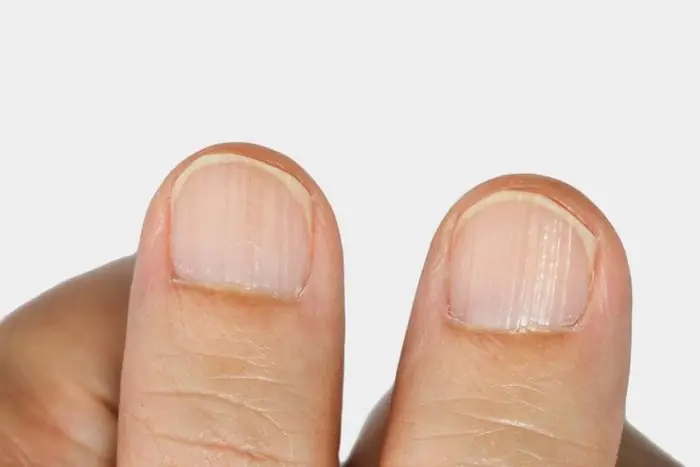
Vertical ridges on the fingernails are something many people begin to notice as they move into their 40s and beyond. These raised or indented lines run from the base of the nail all the way to the tip and can appear deeper or more defined with age. For most individuals, this change is completely normal. It reflects the natural slowing of nail cell turnover and the gradual reduction in moisture and oil production that occurs as part of the aging process. When the nail grows more slowly, the surface may appear less smooth, causing ridges to stand out more clearly.
Several everyday factors can make these ridges even more visible. Frequent handwashing, repeated exposure to soaps and detergents, and using harsh cleaning products without gloves can strip the nails of essential oils, leading to dryness and uneven texture. Environmental conditions such as cold weather or dry indoor air from heaters can also contribute. In addition, overall nail health is closely tied to internal wellness. Nutritional imbalances—particularly deficiencies in biotin, iron, zinc, or protein—may influence how the nail plate forms. When paired with symptoms like fatigue, brittle hair, or pale skin, changes in nail texture may hint at underlying nutrient shortages.
Although most vertical ridges develop slowly and have harmless explanations, it’s still important to stay aware of your nail health. In rare cases, sudden or dramatic changes may signal issues affecting the skin, immune system, thyroid function, or circulation. Nails can sometimes reflect health problems before other symptoms appear. Warning signs such as pain, swelling around the nail, significant thickening, discoloration, or dark streaks that appear unexpectedly should always be evaluated by a healthcare professional to rule out more serious conditions.
Fortunately, caring for your nails and reducing the appearance of ridges is relatively simple. Regular moisturizing with hand cream or cuticle oil helps keep the nail surface hydrated and flexible. Drinking enough water and following a balanced diet rich in vitamins, minerals, and healthy fats supports healthy nail growth from the inside out. Using protective gloves when cleaning, avoiding overly aggressive buffing, and choosing gentle manicure tools can prevent damage and maintain nail strength.
Vertical ridges are a normal part of aging for most people, but with consistent, mindful care, you can encourage smoother, healthier-looking nails and support their overall resilience as you grow older.
What Vertical Ridges on Your Fingernails Really Mean: Normal Aging, Nail Care, and Warning Signs You Should Never Ignore
1. Introduction: Why Do Vertical Ridges Appear on Fingernails?
Have you ever looked closely at your fingernails and noticed fine lines running from the base of each nail toward the tip? Perhaps the lines have become more noticeable over the years, or your nails no longer look as smooth as they once did.
You are not alone. Vertical nail ridges are common, particularly as people get older. For most individuals, these lines are a normal variation in nail texture rather than a sign of a serious medical condition.
According to the Mayo Clinic, vertical ridges frequently become more prominent with age because of changes in the way nail cells grow and renew themselves. In many cases, they require no medical treatment. Mayo Clinic
Nevertheless, not every nail change should be dismissed as a natural consequence of aging. The appearance of a nail, the speed at which a change develops, whether one or several nails are affected, and the presence of other symptoms can all provide useful clues.
The most important distinction is between longstanding, fine vertical lines and new or unusual changes in nail color, thickness, shape, or growth.
Understanding this difference can help you care for your nails appropriately without becoming unnecessarily worried about ordinary changes.
2. What Are Vertical Nail Ridges?
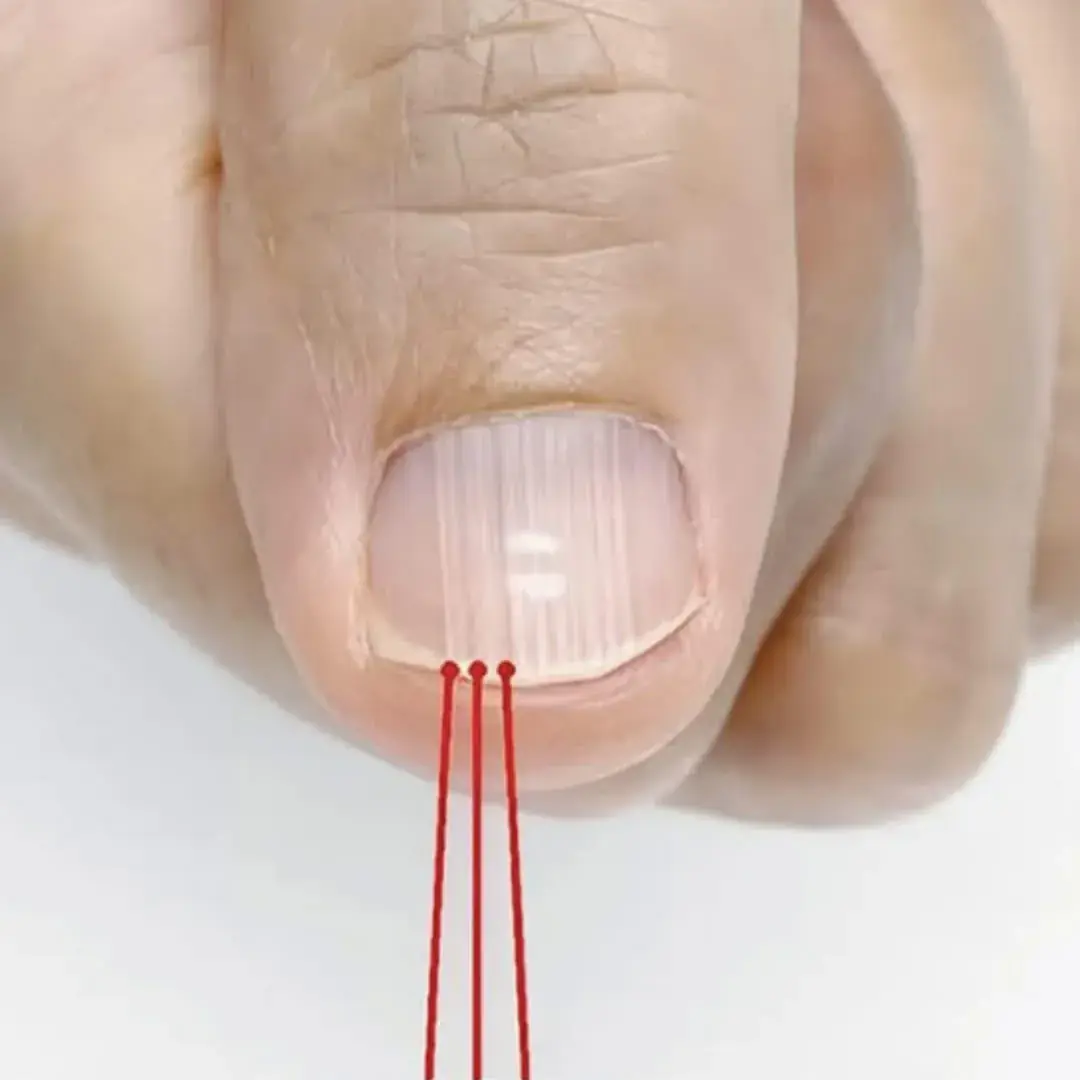
Vertical nail ridges, medically described as longitudinal ridges, are raised lines or shallow grooves that extend along the length of a nail.
They usually run from the cuticle—the skin surrounding the base of the nail—toward the free edge at the fingertip.
Depending on the individual, these lines may be barely visible or sufficiently pronounced to make the nail surface feel uneven.
Some people have ridges on nearly every fingernail, while others notice them mainly on their thumbs or index fingers. The depth and visibility of the ridges can also differ from one nail to another.
How fingernails grow
To understand why ridges appear, it helps to know a little about nail anatomy.
Most of the visible nail plate consists of hardened keratin, a structural protein also found in hair and the outer layer of skin.
The nail plate is produced by the nail matrix, a specialized area of tissue beneath the skin at the base of the nail. As new cells develop and mature, they contribute to the formation of the nail plate, which gradually moves forward over the nail bed.
The visible nail is therefore a record of ongoing growth.
When the nail matrix produces cells in a pattern that creates slight variations in the nail surface, longitudinal lines may become visible.
These lines can occur naturally and do not necessarily indicate that the nail is damaged or that the body is missing an essential nutrient.
Are vertical ridges the same as horizontal ridges?No. The direction of a ridge can be an important distinction.
Vertical ridges run from the base of the nail toward the tip. They are common and often harmless, particularly when they develop gradually.
Horizontal ridges, sometimes called Beau's lines, run across the nail from one side to the other. They may develop when nail growth is temporarily interrupted by an illness, injury, certain treatments, or other significant stressors.
Neither pattern establishes a diagnosis on its own. However, new horizontal grooves or pronounced changes in nail growth deserve medical attention, particularly when accompanied by other symptoms.
3. Why Vertical Ridges Become More Noticeable With Age
One of the most common explanations for vertical nail ridges is normal aging.
As people grow older, the skin, hair, and nails undergo gradual changes. Nail growth and the processes that produce the nail plate can change over time, making the surface appear less uniform.
Fine lines that were barely visible in early adulthood may become easier to see in middle age or later life.
This change is not necessarily a sign of declining health.
Changes in nail growth
Fingernails generally grow more slowly than toenails, and growth rates vary between individuals. Age, health, medications, season, and the particular finger can influence how quickly a nail grows.
As the nail matrix changes over time, small variations in the nail plate may become more apparent.
However, it is too simplistic to say that every ridge develops because the body produces fewer nail cells. Nail growth is influenced by several interacting biological processes, and the precise explanation for ordinary ridges can vary.
The practical point is that age-related ridges are common and usually do not require treatment.
Changes in moisture and flexibility
Aging skin can become drier, and the skin around the nails may lose some of its natural softness and flexibility.
Repeated washing, exposure to detergents, cold weather, and indoor heating can contribute to dryness.
The nail plate itself is not living skin, and moisturizing it does not reverse the aging process. However, applying an emollient to the nails and surrounding skin can help reduce brittleness and improve their appearance.
A nail with a rough surface may also catch the light differently, making existing ridges seem more prominent.
Genetics and individual differences
Not everyone develops the same degree of nail ridging.
Genetic factors, inherited nail characteristics, occupation, grooming habits, and exposure to water or chemicals can all contribute to differences in nail texture.
Some healthy people naturally have pronounced longitudinal ridges from an early age.
Therefore, comparing your nails with those of another person is not a reliable way to judge your health.
A better approach is to understand your own normal nail appearance and pay attention to meaningful changes over time.
4. Everyday Habits That Can Make Nail Ridges More Visible
Age is not the only factor that influences nail texture. Daily activities can affect the condition of the nail plate and surrounding skin.
Fortunately, many of these influences can be managed with simple changes.
Frequent handwashing
Regular handwashing is important for preventing infections, but repeated exposure to water and soap can dry the skin surrounding the nails.
Repeated wetting and drying may also contribute to brittle nails and splitting.
People who wash their hands frequently for work, household duties, or personal care may notice that their nails become rougher or more fragile.
The solution is not to avoid washing your hands. Instead, use a gentle cleanser when appropriate and apply moisturizer afterward.
Household cleaning products
Detergents, solvents, and other cleaning products can irritate the skin and weaken the condition of the nails when exposure is frequent.
People who regularly wash dishes, clean bathrooms, or handle household chemicals may benefit from wearing suitable protective gloves.
Gloves should be appropriate for the product being used, and hands should be dried thoroughly after cleaning.
If a product causes burning, redness, itching, or persistent irritation, stop using it when possible and seek medical advice if symptoms continue.
Nail polish and artificial nails
Frequent manicures can sometimes contribute to nail damage.
Aggressive filing, repeated buffing, picking off gel polish, or forcibly removing artificial nails can thin or split the nail plate.
Cuticle cutting and pushing may also injure the tissue responsible for producing healthy nails.
These problems can create irregular surfaces that are mistaken for ordinary age-related ridges.
To protect the nails, avoid excessive filing and do not peel away polish or artificial nail products. Allow time for recovery if the nails become thin, tender, or damaged.
Cold weather and dry indoor air
Cold weather and low humidity can contribute to dry skin and brittle nails.
Indoor heating may further reduce humidity, particularly during winter.
Although these environmental conditions do not necessarily cause the underlying ridges, they can make the surrounding skin uncomfortable and increase nail splitting.
Using hand cream after washing and cuticle moisturizer when needed can help maintain comfort and flexibility.
5. Can Vertical Nail Ridges Indicate a Nutritional Deficiency?
Nail changes can sometimes accompany nutritional deficiencies, but vertical ridges alone are not a reliable way to identify one.
This distinction is important because online articles frequently attribute nail changes to deficiencies of biotin, iron, zinc, or protein without sufficient evidence that the particular nail appearance proves a deficiency.
Nails reflect several biological processes. Similar changes may occur for entirely different reasons, so the appearance of a ridge cannot establish which nutrient, if any, is
Iron deficiency
Iron is needed to produce hemoglobin, the protein in red blood cells that carries oxygen.
When iron deficiency becomes significant, it may lead to iron-deficiency anemia. Possible symptoms include fatigue, weakness, dizziness, shortness of breath during activity, and reduced exercise tolerance.
Some people with iron deficiency develop nail changes, including thin or spoon-shaped nails. This appearance is known as koilonychia.
However, ordinary vertical ridges are not a specific indicator of iron deficiency.
If nail changes occur alongside persistent fatigue, unusual paleness, or other concerning symptoms, a healthcare professional can assess whether blood tests are appropriate.
Do not start taking iron supplements solely because your nails have ridges. Excess iron can be harmful, and treatment should be based on an appropriate assessment.
Biotin
Biotin is a B vitamin involved in several metabolic processes.
Biotin deficiency is uncommon, and evidence that supplements improve ordinary age-related nail ridges is limited.
Some small studies have suggested that biotin may help certain people with brittle nails, but that does not mean everyone with ridges needs a supplement.
High-dose biotin can also interfere with certain laboratory tests, including some tests used to assess thyroid function and heart-related conditions.
Always tell your healthcare professional if you take biotin, especially before blood testing. Ask whether you need to pause it before a particular test rather than deciding on your own.
Zinc
Zinc supports immune function, growth, wound healing, and many cellular processes.
Severe zinc deficiency can cause changes involving the skin, hair, and nails. Nevertheless, isolated vertical ridges are not enough to diagnose it.
People with restrictive diets, certain digestive disorders, or conditions affecting nutrient absorption may need an individualized nutritional assessment.
Taking excessive zinc can cause nausea and, over time, interfere with copper absorption. Supplements should therefore be used for a clear reason rather than as a general response to nail texture.
Protein
Keratin is a protein, so adequate protein intake is important for normal nail growth.
A diet that provides too little protein and energy over an extended period can affect the body in several ways, including hair and nail changes.
However, a person who eats enough protein can still have vertical ridges because these lines are common in otherwise healthy individuals.
For most people, a balanced diet containing appropriate protein sources is a more sensible approach than taking specialized nail supplements without evidence of a deficiency.
When nutritional testing may be appropriate
Testing may be considered when nail changes occur alongside symptoms, dietary restrictions, unexplained weight changes, digestive problems, or other findings that raise concern about nutritional status.
The appropriate tests depend on the overall clinical picture.
A clinician may ask about eating habits, medications, menstrual blood loss, gastrointestinal symptoms, and medical history before deciding whether testing is needed.
The key lesson is simple: nail ridges are a reason to observe, not a diagnosis of a nutrient deficiency.
6. Can Nail Ridges Reveal Thyroid or Other Health Problems?
The appearance of the nails can sometimes provide clues about health, but the clues are rarely specific enough to identify a condition without further assessment.
Certain thyroid disorders, inflammatory skin conditions, injuries, and other illnesses can affect nail growth or texture.
However, it would be misleading to conclude that ordinary vertical ridges are evidence of thyroid disease, poor circulation, or immune dysfunction.
Thyroid disorders
The thyroid gland produces hormones that help regulate metabolism.
When thyroid function is abnormal, people may experience symptoms affecting energy, temperature tolerance, skin, hair, and other body systems.
Some people with hypothyroidism develop dry skin and brittle nails. Changes in nail growth may occur as part of the broader condition.
Nevertheless, vertical ridges by themselves are not a reliable screening test for thyroid disease.
If nail changes occur alongside persistent fatigue, unusual sensitivity to cold, constipation, unexplained weight changes, or other ongoing symptoms, discuss them with a healthcare professional.
Whether thyroid testing is appropriate depends on the complete clinical picture.
Skin conditions
Certain skin conditions can affect the nail matrix and alter the nail surface.
For example, psoriasis may produce small pits, separation of the nail from the nail bed, discoloration, or other changes. Eczema and chronic inflammation around the nails can also affect their appearance.
People who repeatedly pick at or push back the cuticles may develop distinctive longitudinal grooves, particularly on the thumbnails.
These changes differ from the fine, stable ridges commonly associated with aging.
A dermatologist can often distinguish among these patterns by examining the nails, surrounding skin, and medical history.
Circulation and systemic illness
Some nail shapes and colors can be associated with systemic illness, but isolated vertical ridges do not reliably indicate poor circulation.
Changes such as blue nail beds, marked nail curvature, unexplained discoloration, or major alterations in nail growth may warrant assessment.
Likewise, a sudden change affecting several nails may be worth discussing with a healthcare professional, especially if it follows a serious illness or occurs alongside other symptoms.
The important principle is to interpret nail changes in context rather than assuming that one visible feature points to one particular disease.
7. Vertical Ridges Versus Warning Signs: What Should You Watch For?
Most ordinary vertical ridges are harmless. Still, some nail changes deserve prompt attention.
The American Academy of Dermatology recommends that people seek evaluation for certain changes in nail color, shape, attachment, and growth. American Academy of Dermatology.
A new dark streak
A new brown or black streak beneath a fingernail or toenail should not automatically be attributed to aging.
Although many dark nail marks have benign explanations, a changing pigmented band can sometimes indicate melanoma, a type of skin cancer that may develop beneath or around the nail.
Arrange an appointment with a dermatologist for a new or changing dark streak, particularly if it widens, becomes irregular, develops several colors, or extends onto the surrounding skin.
Do not wait for pain to appear. Nail melanoma may not be painful in its early stages.
Horizontal grooves
Deep grooves running across a nail can indicate that nail growth was temporarily interrupted.
Possible causes include a significant illness, injury, certain medical treatments, or other stressors.
A single groove may grow out as the nail advances. Multiple affected nails, repeated grooves, or changes that occur without an obvious explanation should be discussed with a healthcare professional.
Pain, redness, or swelling
Painful nails or inflamed skin around the nail may result from infection, injury, an ingrown nail, or another condition.
Seek medical assessment if the area becomes increasingly red, swollen, warm, or tender, or if pus develops.
Prompt attention is especially important when symptoms spread or are accompanied by fever.
Nail lifting, thickening, or splitting
A nail that separates from the nail bed may develop a white or yellowish area underneath.
Possible explanations include injury, fungal infection, inflammatory disease, and other nail disorders.
Marked thickening, unexplained splitting, persistent discoloration, or changes in the shape of several nails also deserve assessment.
These features are different from ordinary fine ridges and may require treatment directed at the underlying cause.
When to seek urgent help
Most nail changes do not constitute a medical emergency.
However, seek urgent medical care if you develop rapidly spreading redness or swelling with fever, severe pain following an injury, or other signs of a serious infection.
A new or changing dark nail streak generally requires a timely dermatology appointment rather than waiting months to see whether it disappears.
8. How to Care for Nails With Vertical Ridges
Although there is no guaranteed way to eliminate normal age-related ridges, several practical habits can help protect nail health and reduce brittleness.
Moisturize regularly
Apply hand cream after washing your hands and whenever your skin feels dry.
A product containing ingredients such as glycerin, petrolatum, or other emollients can help reduce moisture loss from the skin.
Cuticle oil may also improve the flexibility and appearance of the nail's surrounding tissues.
For convenience, keep moisturizer near the sink, on your desk, or beside your bed so that using it becomes part of your daily routine.
Consistency is more useful than applying a large amount only occasionally.
Protect your hands during cleaning
Wear suitable gloves when handling household cleaning products or when your hands will remain wet for long periods.
Avoid using gloves that trap excessive moisture for extended periods, and dry your hands thoroughly after washing.
If you have sensitive skin, consider fragrance-free moisturizers and gentle cleansers.
Trim nails carefully
Keep nails at a comfortable length and use clean nail clippers or manicure tools.
File gently in one direction where practical, and avoid filing aggressively across the nail surface.
Do not cut or forcibly push back the cuticles. The cuticle area helps protect the tissues responsible for producing the nail.
If your nails are already thin or brittle, reducing the frequency of manicures and avoiding harsh removal techniques may help prevent additional damage.
Avoid excessive buffing
Buffing may temporarily make ridges less visible by smoothing the surface.
However, repeated or vigorous buffing removes layers of the nail plate and can leave the nails thinner and more fragile.
If cosmetic smoothing is important to you, use a gentle approach and avoid trying to make the nail perfectly flat.
Healthy nails do not have to be completely smooth.
9. Does Drinking More Water Make Nail Ridges Disappear?
Hydration is important for general health, but drinking extra water has not been established as a treatment for ordinary vertical nail ridges.
If you are dehydrated, correcting that problem is beneficial. However, a person who already drinks enough fluids should not expect additional water to remove age-related ridges.
Nail texture is influenced by nail growth, genetics, aging, environmental exposure, and other factors.
Topical moisturizers can help with dry surrounding skin and may improve the appearance of brittle nails, but they do not reverse the biological processes that produce a ridge.
The sensible approach is to drink according to your needs, follow any fluid guidance provided for existing medical conditions, and focus on protecting the nails from excessive drying and mechanical damage.
10. What Should You Eat for Healthy Nails?
Healthy nail growth depends on adequate overall nutrition rather than a single special food.
A balanced eating pattern can provide protein, vitamins, minerals, and essential fats needed by the body.
Useful food choices include:
Eggs, fish, poultry, beans, and tofu: sources of protein and other nutrients involved in normal tissue maintenance.
Nuts, seeds, and whole grains: provide a range of minerals and other nutrients.
Leafy green vegetables and legumes: contribute folate, iron, and other micronutrients.
Fruit and vegetables: provide vitamins, minerals, and fiber.
Dairy products or suitable fortified alternatives: can contribute protein and other nutrients, depending on the product.No individual food is known to eliminate ordinary vertical nail ridges.
If you already eat a varied diet, adding more of one particular food is unlikely to transform your nail surface.
If you have a restricted diet or a diagnosed deficiency, a clinician or registered dietitian can help determine whether dietary changes or supplements are appropriate.
11. Should You Take Supplements for Nail Ridges?
Supplements are widely marketed for stronger hair, skin, and nails. Some people may benefit from supplementation when they have a confirmed nutritional deficiency, but routine use is not necessary for everyone.
Biotin is a common ingredient in nail supplements, yet evidence for its benefit in people without deficiency is limited.
Other products may contain zinc, iron, collagen, or combinations of vitamins and minerals. The presence of these ingredients does not prove that the supplement will improve nail ridges.
Supplements can also cause problems when taken in excessive amounts or combined with medications.
For example, excessive zinc can interfere with copper absorption, while unnecessary iron supplementation may cause harm. High-dose biotin can interfere with some laboratory tests.
Before starting a supplement, consider whether you have a clear nutritional need and whether the product is appropriate for you.
If the ridges are the only concern and your nails are otherwise healthy, gentle nail care may be all that is needed.
12. How Long Does It Take for Nail Changes to Grow Out?
Fingernails grow gradually, so visible changes do not disappear overnight.
For many adults, a fingernail grows approximately a few millimeters per month, although the rate varies. A complete fingernail may take around four to six months to grow out, sometimes longer.
This means that a ridge caused by a temporary interruption in nail growth may remain visible for weeks or months while the nail advances.
Similarly, damage to the nail plate caused by aggressive manicures cannot be repaired instantly. The affected section must gradually grow out.
During this period, protecting the nail from additional injury may help prevent further splitting and breakage.
However, do not assume that every unusual mark will safely disappear with growth. A new or changing dark streak, unexplained nail separation, or persistent abnormality should be evaluated rather than simply watched for months.
13. What Happens During a Medical Examination?
If you seek medical advice for nail changes, the clinician will usually begin by examining the nails and asking about your symptoms.
They may ask when the changes began, whether they affect one nail or several, whether you have experienced an injury, and whether you use nail products or handle chemicals frequently.
They may also ask about medications, recent illnesses, dietary habits, and other health symptoms.
Depending on the findings, the clinician may recommend observation, changes to nail care, treatment for an underlying skin or nail condition, or further investigation.
Blood tests are not automatically necessary for ordinary vertical ridges. They may be considered when the history or examination suggests a nutritional deficiency, thyroid disorder, anemia, or another systemic condition.
If a dark pigmented streak raises concern, a dermatologist may examine it more closely and determine whether additional testing is needed.
The goal is not to investigate every harmless ridge. It is to identify changes that are unusual enough to warrant further attention.
14. A Simple Monthly Nail Check
You do not need elaborate equipment to keep track of your nail health.
Once a month, take a moment to examine your fingernails and toenails in good lighting.
Look at the overall color, shape, thickness, and surface texture. Notice whether a ridge has been present for years or whether it appeared recently.
Check for new dark streaks, unexplained swelling, separation from the nail bed, persistent pain, or changes involving the skin around the nail.
If you notice a suspicious change, take a clear photograph to help document its appearance and arrange appropriate medical advice. A photograph can help track changes but cannot rule out a serious condition.
Avoid repeatedly inspecting your nails for tiny variations that do not change. The purpose is to recognize meaningful differences, not to make ordinary imperfections a source of constant worry.
Conclusion: Most Vertical Nail Ridges Are Harmless, but Context Matters
Vertical ridges are a common feature of fingernails, and they often become more noticeable as people grow older.
They can reflect ordinary differences in nail growth, aging, dryness, or repeated exposure to water and cleaning products. In many cases, no treatment is necessary.
Moisturizing the hands, protecting the nails from harsh chemicals, avoiding aggressive buffing, and eating a balanced diet can help maintain healthy-looking nails.
At the same time, ordinary vertical ridges should not be used to diagnose a vitamin deficiency, thyroid disorder, or circulation problem. Nutritional supplements are not automatically necessary simply because the nail surface is uneven.
Pay closer attention to sudden or significant changes, especially new dark streaks, horizontal grooves, unexplained thickening, nail separation, pain, or inflammation.
If a nail develops a new or changing brown or black band, seek timely assessment by a dermatologist because, although uncommon, nail melanoma is an important condition to exclude.
Ultimately, healthy nails do not have to be perfectly smooth. The most useful approach is to understand what is normal for you, care for your nails gently, and seek professional advice when a change is new, unexplained, or accompanied by other symptoms


0 comments:
Post a Comment