
The photo did more than appear on social media. It exploded into the conversation.
One frame. Two men. A father and son standing side by side in bold Versace looks, seemingly unconcerned with the invisible rules that have long dictated how men - especially Black men are expected to dress, behave, and present themselves to the world.
The image immediately became the kind of photograph people could not simply scroll past. Some praised it. Others mocked it. Some admired the confidence and creativity behind the styling, while others questioned why a father and son would choose to dress in a way that challenged traditional ideas of masculinity.
But as the initial reactions faded and timelines moved on to the next viral moment, something more meaningful remained.
The clothes were never really the whole story.
What made the photograph so striking was the tension it exposed between self-expression and social expectation. It raised a much bigger question about why men are so often encouraged to make themselves smaller, quieter, tougher, and less emotionally expressive in order to fit an image of what “real masculinity” is supposed to look like.
For Will and Jaden, the photograph offered a very different possibility.
It suggested that masculinity does not have to be one-dimensional. A man can be confident without being intimidating. He can be stylish without worrying that fashion will make him appear less masculine. He can embrace softness without surrendering strength. And perhaps most importantly, he can allow himself to be seen without constantly worrying about whether everyone else approves.
More Than Just an Outfit
At first glance, it would be easy to reduce the entire moment to fashion.
The bold prints. The unconventional silhouettes. The confidence of two people wearing something that refuses to blend into the background.
But reducing the photograph to clothing misses the larger idea behind it.
Fashion has always been more than fabric. What people wear can communicate identity, confidence, culture, creativity, rebellion, and even vulnerability. Clothing can become a language, particularly when someone chooses a style that does not conform to expectations.
That is part of what made the photograph so memorable.
The image did not ask for permission.
There was no attempt to soften the message or make the outfits more acceptable to people who preferred something more traditional. Instead, the styling appeared to embrace individuality completely.
And that can be uncomfortable for people who have spent their lives learning that certain forms of self-expression are acceptable only for certain people.
For men, those expectations can be especially rigid.
From childhood, many boys are taught—sometimes directly and sometimes indirectly—that they should be tough, restrained, competitive, emotionally controlled, and visually conservative. Certain colors are considered “too feminine.” Certain clothes are considered inappropriate. Certain gestures, poses, or expressions are treated as signs that a man is somehow stepping outside the boundaries of masculinity.
The photograph quietly challenged all of that.
When Softness Becomes a Statement
Perhaps one of the most interesting aspects of the image was its sense of softness.
Not weakness.
Softness.
The two are not the same.
For generations, society has often presented strength and tenderness as opposing forces. Men are expected to be strong, while tenderness is frequently associated with vulnerability. Yet real life is far more complicated.
A person can be strong and gentle at the same time.
A father can be protective without being emotionally distant. A son can be confident without pretending to be invulnerable. A man can care deeply about appearance, art, fashion, beauty, and self-expression without having to apologize for any of it.
That is why the photograph resonated beyond the clothes themselves.
It represented a version of masculinity that did not depend entirely on armor.
There was no need to appear hardened. No need to perform toughness for the camera. No need to prove strength through aggression or emotional distance.
Instead, the message was communicated through presence.
Here we are. This is how we choose to express ourselves.
And sometimes, simply making that choice publicly can be powerful.
A Father and Son Seen Through a Different Lens
There was also something significant about the fact that the photograph featured a father and son.
Family images often come with their own expectations. A father and son are frequently imagined through familiar stereotypes: the older generation teaching the younger one how to be strong, responsible, disciplined, and “manly.”
But this image suggested another kind of relationship—one in which individuality could be shared rather than suppressed.
Instead of presenting masculinity as a strict set of rules passed down from one generation to the next, the photograph opened the door to something more flexible.
A father and son could stand together while expressing themselves differently.
They could share confidence without needing to look identical.
They could embrace fashion, creativity, and individuality without treating those qualities as incompatible with strength.
That makes the image feel less like a simple fashion moment and more like a snapshot of changing attitudes between generations.Younger men today are increasingly willing to question ideas that previous generations may have accepted without much discussion. They are more comfortable discussing mental health, personal identity, emotional vulnerability, fashion, beauty, and self-expression.
That does not mean every old definition of masculinity has disappeared.
Far from it.
But the conversation is changing.
Why Reactions Were So Strong
The strongest reactions to images like this often have less to do with the clothing itself and more to do with what the clothing represents.
People bring their own assumptions to what they see.
For one viewer, the image might represent creativity and confidence. For another, it might seem unnecessarily provocative. Someone else might simply see two people enjoying fashion.
That difference is important because photographs do not exist in isolation.
They interact with the expectations people have already absorbed from family, culture, media, and society.
When an image challenges those expectations, the reaction can be surprisingly emotional.
People may laugh because they are uncomfortable. Others may criticize because the image challenges something familiar. Still others may celebrate it because they recognize a freedom they wish they had experienced themselves.
In that sense, the photograph became almost like a mirror.
It revealed more than the people standing in front of the camera. It revealed the expectations of the people looking at them.
Redefining What Strength Looks Like
For years, popular culture has often relied on a narrow visual vocabulary for masculinity.
Broad shoulders.
Serious expressions.
Traditional suits.
Muted colors.
Controlled emotions.
A certain kind of physical presence.
But strength has never belonged exclusively to one aesthetic.
Confidence can look elegant.
Strength can look gentle.
Masculinity can exist alongside creativity.
And style can be playful without becoming meaningless.
The photograph challenged the assumption that a man has to choose between being respected and being expressive.
Perhaps the more interesting question is why such a choice was ever considered necessary.
Why should a man have to sacrifice softness to be taken seriously?
Why should fashion be treated as a threat to masculinity?
Why should vulnerability automatically be interpreted as weakness?
And why should self-expression require approval?
Those questions remain relevant far beyond one image.
The Power of Being Unapologetically Yourself
The lasting impact of moments like this does not necessarily come from changing everyone's mind.
It comes from showing that another possibility exists.
Someone watching that photograph might see a father and son wearing bold clothes.
Someone else might see confidence.
Another person might see rebellion.
And someone who has spent years worrying about whether they are “masculine enough” might simply see permission to relax.
Permission to experiment.
Permission to wear something they genuinely like.
Permission to be softer.
Permission to be different.
Permission to stop performing for an imaginary audience.
That may be the most powerful part of the entire moment.
The image did not need to be a speech or a political statement. It did not need a long explanation.
Sometimes a photograph can communicate an idea simply by refusing to conform.
The Rules Were Never as Permanent as They Seemed
Perhaps the biggest realization hidden inside the photograph is that many of the “rules” surrounding masculinity are not universal truths.
They are cultural expectations.
And cultural expectations can change.
What one generation considers unusual can become completely ordinary to the next. Fashion evolves. Social attitudes shift. Definitions of identity become more expansive. People begin questioning traditions that once seemed untouchable.
That does not mean everyone has to dress the same way or share the same definition of masculinity.
Quite the opposite.
The point is that people should have room to define themselves without automatically being forced into a narrow category.
For Will and Jaden, the photograph became one visible example of that freedom.
Not because the clothes were revolutionary on their own, but because the confidence behind the choice was impossible to ignore.
A Photo That Asked a Bigger Question
Long after the initial reactions disappeared, the image still carried one simple question:
Who would you be if you stopped dressing, behaving, and presenting yourself entirely for other people's comfort?
That question extends beyond fashion.
It applies to the way people speak, love, create, express emotion, raise children, build relationships, and move through the world.
The photograph became memorable not because everyone agreed with it, but because it gave people something to debate.
It challenged assumptions.
It created discomfort.
It inspired admiration.
And ultimately, it reminded viewers that identity does not have to fit neatly inside someone else's definition.
Maybe that was the real statement behind the outfits.
Not that everyone should dress the same way.
Not that traditional masculinity should disappear.
But that strength and softness can exist in the same person. Confidence does not require conformity. And self-expression does not become less valuable simply because someone else does not understand it.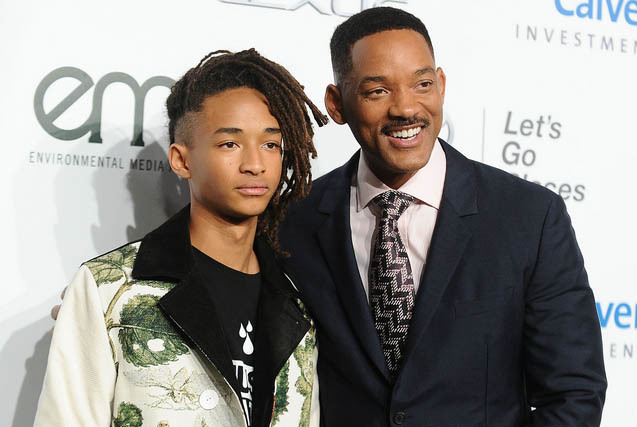
The clothes caught attention.
The relationship between father and son gave the image warmth.But the deeper message was about freedom - the freedom to be seen as a complete human being rather than a collection of rules about how a man is supposed to look.
And perhaps that is why the photograph lingered long after the internet had moved on.
The real shock was never the prints, the crop tops, or the Versace.
It was the possibility that the rules people had been taught to follow were never as permanent - or as necessary as they believed.
Long before a boy understands what masculinity means, he begins learning what the world expects from him.
Sometimes the lessons arrive through direct instructions. He is told to stand straight, stop crying, toughen up, or avoid anything that might make him appear weak. Other times, the messages are quieter. He notices which boys receive praise, which behaviors earn ridicule, and which emotions make adults uncomfortable. Without anyone formally explaining the rules, he begins to understand that certain parts of himself are welcomed while others are expected to remain hidden.
Over time, those small lessons can become an invisible framework for how he sees himself.
He may learn that anger is acceptable but sadness is embarrassing. Confidence is encouraged, but uncertainty must be concealed. Ambition is admired, while sensitivity is sometimes treated as a flaw. Even clothing can become part of this complicated education, with colors, silhouettes, accessories, and hairstyles assigned meanings that have little to do with a person's actual character.
These expectations do not affect every man in the same way. Some grow up in families that encourage emotional openness and individuality. Others experience environments where conformity is closely connected to acceptance. Culture, generation, community, and personal experience all influence how masculinity is understood.
Yet the pressure to prove oneself can be remarkably persistent.
A man may enter adulthood believing he must constantly demonstrate that he is strong enough, successful enough, confident enough, and sufficiently in control. Even when nobody explicitly questions him, he may feel compelled to anticipate judgment before it happens.
That is where the invisible rules become powerful. They no longer need to be enforced by other people because the individual begins enforcing them on himself.
He might avoid a color he loves, reject an artistic interest, hide his emotions, or refuse to ask for help. He may choose clothes according to what will attract the least criticism rather than what makes him feel most comfortable. The decisions can appear insignificant, but repeated over years, they can shape an entire way of living.
This is why an unconventional fashion photograph can generate reactions far beyond its immediate subject. The clothes become a visible challenge to expectations that many people have absorbed without consciously choosing them.
When viewers see men wearing bold, expressive outfits, they are not simply evaluating fabric or design. They may also be confronting their own assumptions about what a man should look like.
For some, the image feels liberating because it expands the range of acceptable possibilities. For others, it feels uncomfortable because it disrupts a familiar social order. Neither reaction tells us everything about the people involved, but the contrast reveals how strongly appearance can become connected to identity.
The deeper question is not whether every man should embrace unconventional fashion. Personal style is a matter of individual preference, and traditional clothing can be just as authentic as experimental design.
The more important question is whether people should be punished socially for making different choices.
A man who prefers a tailored suit should be free to wear one. A man who enjoys dramatic prints, jewelry, makeup, or unconventional silhouettes should have the same freedom. Neither choice needs to function as proof of character, courage, or moral superiority.
True freedom allows for variety.
It does not replace one rigid expectation with another. It creates enough room for people to decide what feels right for them without being forced to justify every detail of their appearance.
Perhaps that is the real challenge to the invisible rules: learning to distinguish between a choice we genuinely prefer and a choice we make because we are afraid of being judged.
That distinction can be difficult to recognize. Many social expectations become so familiar that they begin to feel like personal convictions. Questioning them requires patience, curiosity, and a willingness to admit that some of our assumptions were inherited rather than deliberately chosen.
But once those assumptions become visible, they also become open to reconsideration.
And sometimes, all it takes to begin that process is seeing someone confidently do something we were taught never to attempt.
When a Father Gives His Son Room to Become Himself
The relationship between a father and a son carries expectations that extend far beyond the family home.
In many cultures, fathers are expected to prepare their sons for the world by teaching discipline, responsibility, independence, and resilience. These lessons can be valuable. Children need guidance, and growing into adulthood requires learning how to make decisions, handle setbacks, and take responsibility for one's actions.But there is a difference between preparing a son to face the world and teaching him to fear its judgment.
A father may want his child to be respected, yet unintentionally communicate that respect depends on fitting a narrow definition of masculinity. He may encourage strength while discouraging vulnerability, promote confidence while criticizing uncertainty, or insist on independence while making it difficult for his son to admit when he needs help.
Often, these patterns are not created out of cruelty. Parents themselves may have grown up under similar expectations. They may sincerely believe they are protecting their children from ridicule by teaching them how to avoid standing out.
The intention may be protection, but the result can sometimes be restriction.
A child who learns that acceptance depends on hiding certain parts of himself may become skilled at appearing acceptable while feeling increasingly disconnected from his own preferences.
That is why the idea of allowing a son room to develop his own identity matters so deeply.
It does not mean abandoning parental guidance or pretending that every decision is equally wise. It means recognizing that guidance and control are not the same thing.
A supportive father can offer advice without demanding that his son become a copy of himself. He can explain the consequences of a decision while respecting his child's right to think independently. He can encourage responsibility without insisting that every expression of personality must fit a predetermined image.
Most importantly, he can make it clear that love is not a reward reserved for conformity.
This principle becomes especially important as children grow older. A young person may explore different interests, experiment with personal style, question inherited beliefs, or discover that his ambitions differ from those of his family. These changes can be uncomfortable for parents who imagined a particular future for their children.
But a child's development is not a rejection of everything the family has taught him.
Sometimes, it is evidence that the lessons have given him enough confidence to think for himself.
A father and son do not need to agree on every aesthetic choice or personal preference to maintain a meaningful relationship. They can have different tastes, different temperaments, and different ways of understanding the world while still sharing affection and respect.
Nor should a photograph be treated as definitive evidence of the private dynamics between two people. A single public image cannot tell us everything about a family, its conversations, or the emotions that exist beyond the camera.
What the image can do, however, is prompt a broader reflection on the possibilities of parental acceptance.
Imagine how differently a young man might approach life if he knew he could experiment without immediately risking rejection. Imagine the confidence that could develop when a child is encouraged to express himself while also learning to respect others. Imagine the conversations that become possible when disagreement does not automatically threaten the relationship.
Such an environment does not guarantee an easy life. The outside world can still be judgmental, and young adults must still learn to navigate criticism, responsibility, and difficult decisions.
But they enter those challenges with a stronger foundation: the knowledge that their worth is not determined by the approval of every person they encounter.
Perhaps one of the most valuable things a parent can give a child is not a perfect model to imitate, but the confidence to develop a model of his own.
That gift extends beyond clothing or appearance. It influences how a person handles relationships, chooses a career, responds to failure, and determines what kind of life feels meaningful.
In the end, the strongest father-son relationship is not necessarily the one in which both people look alike, think alike, or make identical choices.
It may be the one in which both can stand beside each other without needing to erase their differences.
The Freedom to Be Seen Without Asking for Permission
There is a particular kind of exhaustion that comes from constantly imagining how other people might judge you.
Before speaking, you reconsider your words. Before buying something, you wonder whether it will look strange. Before sharing an interest, you calculate whether the people around you will approve. Even ordinary decisions become negotiations between what you want and what you believe others will accept.
Over time, this habit can make a person feel as though he is living two lives: the one he genuinely wants to experience and the one he believes he must perform to remain acceptable.
For many men, appearance becomes one of the most visible places where that tension emerges.
Clothing is public. It can be observed, discussed, photographed, and criticized within seconds. Unlike private beliefs or personal feelings, an outfit is immediately available for other people to interpret.
That visibility can make fashion a surprisingly emotional subject.
A person who wears an unconventional outfit may be expressing nothing more complicated than an appreciation for design. Yet observers can attach meanings to the choice, treating it as a statement about personality, identity, confidence, or social values.Sometimes those interpretations are accurate. Often, they reveal more about the observer than the person wearing the clothes.
This is one reason it is important to separate individual expression from assumptions about character. A person's outfit does not tell us whether he is kind, dependable, intelligent, courageous, or emotionally mature. Those qualities are better understood through behavior, decisions, and the way he treats other people.
Style can communicate something about taste, but it cannot provide a complete account of a human being.
The freedom to express oneself therefore depends partly on allowing other people to remain complicated.
A man can enjoy dramatic fashion and still value tradition. He can prefer understated clothing and still challenge conventional expectations in other areas of his life. He can embrace an unconventional appearance without wanting to become a symbol for an entire movement.
People do not have to represent every idea that others associate with their choices.
That freedom also requires a degree of courage, although courage does not always look dramatic. Sometimes it means wearing something you genuinely enjoy despite anticipating criticism. Sometimes it means admitting that you are hurt rather than pretending to be unaffected. Sometimes it means changing your mind after discovering that an old belief no longer reflects your values.
And sometimes courage means choosing not to participate in the judgment of someone else.
When a photograph becomes controversial, viewers have a choice. They can use the moment to reinforce familiar stereotypes, or they can pause and consider why another person's harmless decision provokes such a strong reaction.
They can disagree with an aesthetic without humiliating the person who chose it. They can prefer traditional masculinity without insisting that everyone must follow the same model. They can express personal taste without turning that taste into a universal rule.
This is not a demand that everyone admire every outfit or approve of every public image. Genuine individuality includes the freedom to dislike a particular style.
The distinction lies in how that disagreement is expressed.
Criticizing a design is different from attacking someone's dignity. Discussing cultural expectations is different from claiming that appearance determines a person's worth. Choosing a traditional way of life is different from denying others the opportunity to choose differently.
A more flexible understanding of masculinity does not require everyone to become identical. It allows men to be different without treating difference as a threat.
That flexibility can have consequences far beyond fashion. When men feel less pressure to perform an impossible image of toughness, they may find it easier to seek help, communicate honestly, build closer relationships, and acknowledge uncertainty. These outcomes are not guaranteed by clothing choices, but they become easier to imagine in a culture that does not automatically equate vulnerability with failure.
Ultimately, the most meaningful form of confidence is not the ability to attract universal approval. No one can achieve that, and pursuing it can become a lifelong source of frustration.
Confidence is the ability to make thoughtful choices while accepting that not everyone will understand them.
It means knowing that criticism may occur without allowing every criticism to become a verdict on your identity.
The photograph of a father and son in bold Versace outfits may be remembered by some people as a striking fashion moment. Others may see it as a challenge to traditional expectations. Still others may simply appreciate the styling.
But its wider significance lies in the conversation it encourages.
What happens when men no longer feel compelled to prove their masculinity through a narrow set of visual and emotional rules? What becomes possible when fathers allow their sons to develop their own identities? How might relationships change when people can express themselves without fearing that every difference will be treated as a betrayal?
There are no simple answers to every question. Social expectations evolve slowly, and individuals will continue to disagree about what masculinity means to them.
Yet one principle remains worth defending: people should be judged more fairly by their character and actions than by whether their appearance satisfies someone else's expectations.
The clothes may attract attention, but they are only the beginning of the conversation.
Beneath the bold patterns and striking silhouettes is a question that reaches into the lives of ordinary people everywhere: how much of ourselves are we willing to hide simply to make others comfortable?
Perhaps the answer begins with a small decision.
Wear what feels authentic. Listen without humiliating. Encourage without controlling. Allow people to grow without demanding that they remain exactly as you imagined them.
And when someone chooses a path different from your own, remember that their difference does not automatically diminish your identity.
The greatest freedom is not the ability to make everyone agree with you. It is the ability to live with integrity while allowing others the same opportunity.
That is a far more enduring statement than any outfit could ever make.


0 comments:
Post a Comment